The Desk-Side Command Center: Evaluating the BarCharts QuickStudy Linux Laminated Guide

In the realm of system administration and software development, context switching remains one of the greatest taxations on productivity. When working deep inside the Linux terminal, stopping to search through lengthy manual pages (man) or browsing online documentation breaks a practitioner’s focus. While comprehensive reference manuals and digital cheat sheets exist, there is a distinct utility in having an immediate, physical quick-reference tool.

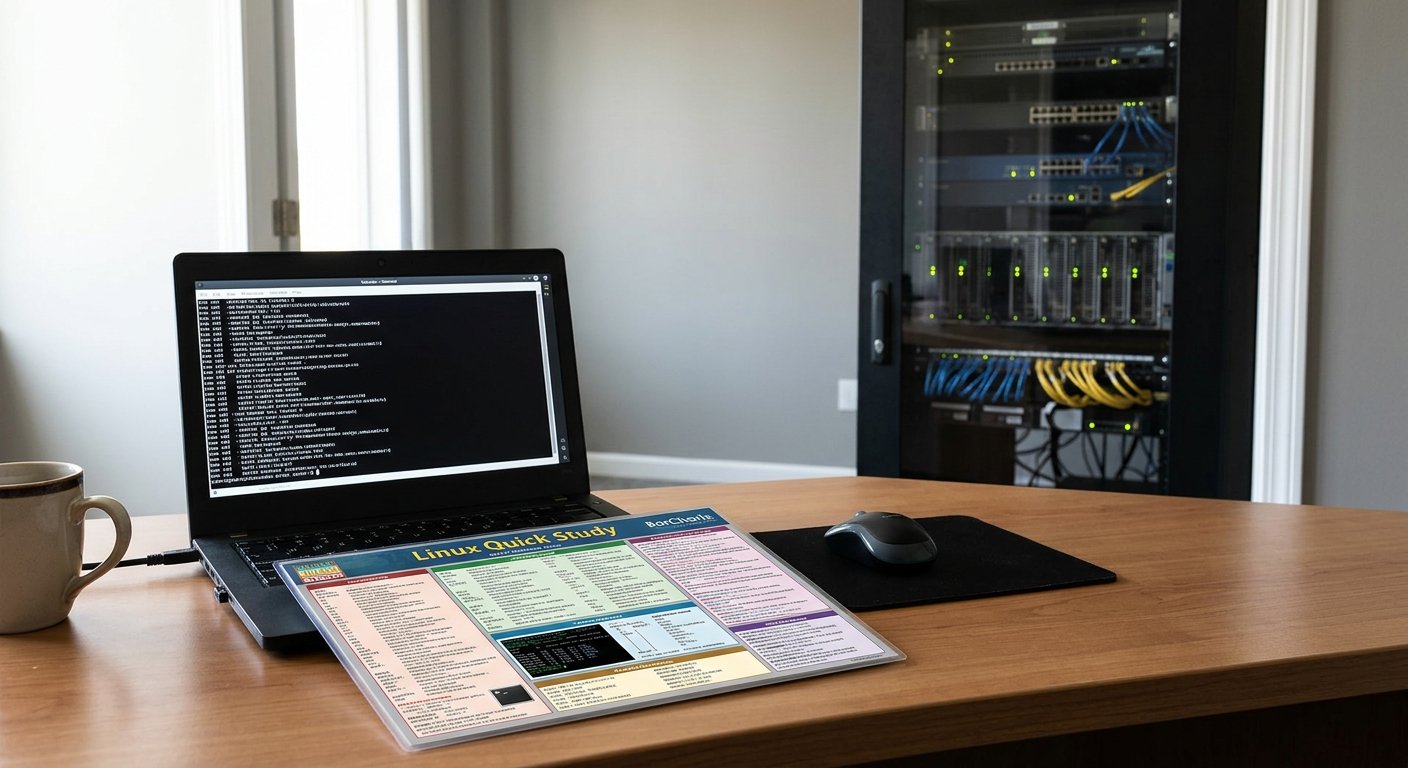
The BarCharts Publishing QuickStudy Linux Laminated Guide stands out as a remarkably practical bridge between introductory learning and daily desktop workflow. Designed in a compact, multi-panel foldout format, this laminated reference sheet condenses a vast array of essential command-line operations, file system structures, and system administration essentials into a high-density, accessible layout.

Continue reading “The Desk-Side Command Center: Evaluating the BarCharts QuickStudy Linux Laminated Guide”


A Comprehensive Guide to the Most Frequently used Linux Bash Commands

1. Navigation & Directory Management

These commands allow you to move around the file system, view contents, and manage folders.

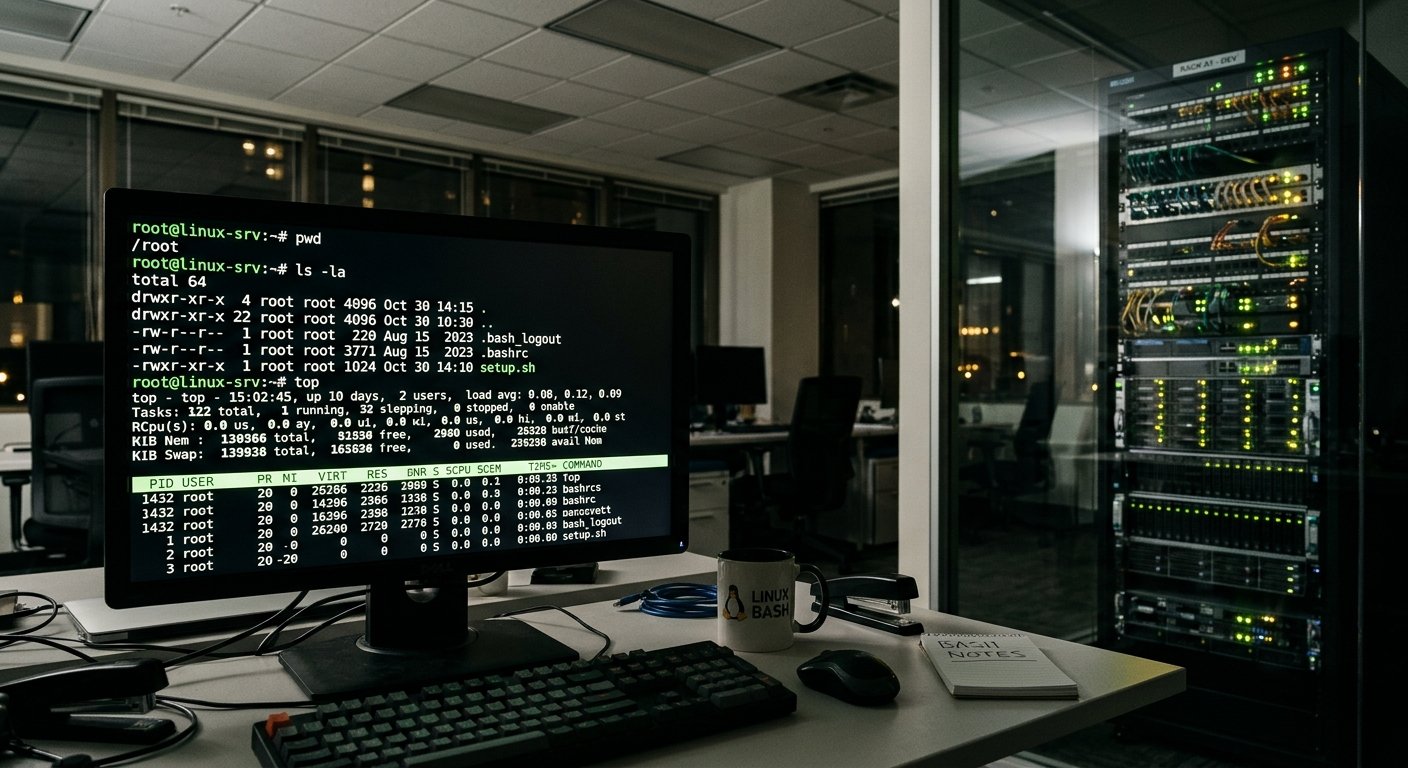
  • pwd (Print Working Directory)
    • Usage: pwd
    • Meaning: Displays the absolute path of the current working directory you are in. Learn more via the GNU Coreutils Documentation.
  • ls (List)
    • Usage: ls -la (Lists all files, including hidden ones, in a detailed list format)
    • Meaning: Lists directory contents. Common flags include -l (long format) and -a (all hidden files). Check out this DigitalOcean Linux Command Cheat Sheet for more options.
  • cd (Change Directory)
    • Usage: cd /path/to/directory or cd ~ (goes to home)
    • Meaning: Changes your current working directory. Typing cd .. moves you up one level.
  • mkdir (Make Directory)
    • Usage: mkdir my_folder or mkdir -p path/to/nested/folder
    • Meaning: Creates a new directory. The -p flag creates parent directories as needed without throwing an error if they already exist.
Continue reading “A Comprehensive Guide to the Most Frequently used Linux Bash Commands”

Decoding Artificial Intelligence: Architecture, Servers, and Connectivity

Artificial Intelligence (AI) has rapidly transformed from a niche academic field into the digital backbone of modern society. Behind the conversational interfaces, automated recommendations, and complex analytical systems lies a vast ecosystem of software, hardware, and global networking.

Understanding how AI functions requires looking past the screen to examine how it works fundamentally, where its servers are physically located, how they integrate with data centers, and how client applications communicate seamlessly with large language models (LLMs).

Continue reading “Decoding Artificial Intelligence: Architecture, Servers, and Connectivity”

Decoding the Divide: Free Software vs. Open Source Software

In the modern technology landscape, terms like “open source” and “free software” are frequently used interchangeably to describe software whose source code is publicly accessible and modifiable. Because many programs satisfy the technical criteria of both definitions, people often assume the terms are synonymous. However, looking deeper into the origins and underlying philosophies reveals a profound distinction. As a popular summary describes it, “Open source is a development methodology; free software is a social movement.”

Continue reading “Decoding the Divide: Free Software vs. Open Source Software”

The Evolution, Core Architecture, and Future of the UNIX Operating System

The UNIX operating system stands as one of the most significant technological achievements in computer science history. Conceived in the late 1960s, UNIX pioneered concepts of modularity, multi-tasking, multi-user access, and a unified hierarchical file system. Its design philosophy—where “small is beautiful” and programs are built to do one thing well—continues to shape the landscape of modern digital infrastructure.

Continue reading “The Evolution, Core Architecture, and Future of the UNIX Operating System”