
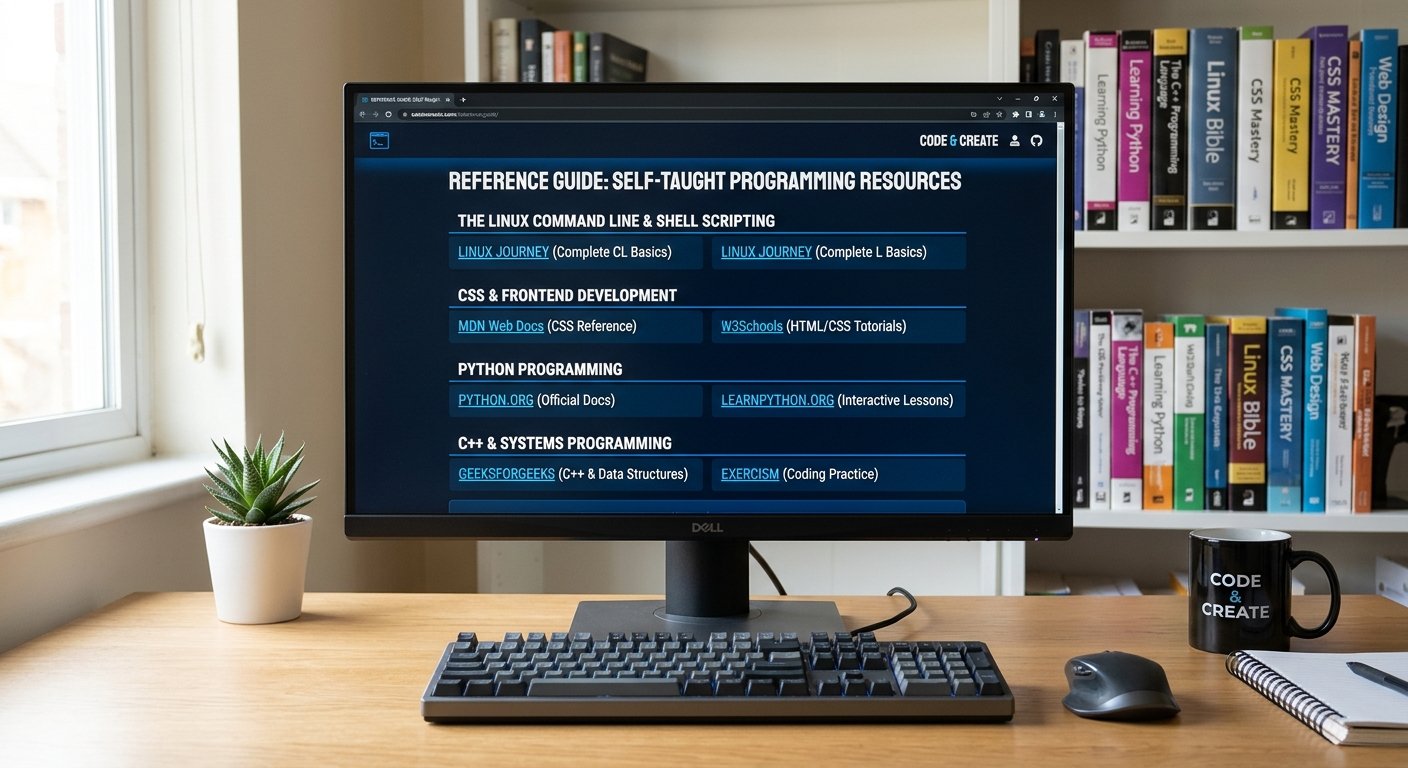
Comprehensive Reference Guide to Self-Taught Programming Resources

Teaching yourself how to code is an empowering endeavor. Whether you are aiming to master systems engineering, scripting environments like the Linux command line, frontend web design, or heavy-duty compiled languages like C++, the internet provides an incredible array of open-source and interactive curricula.

This reference listing outlines curated, high-value websites categorized by their strengths in teaching specific languages, environments, and core fundamentals.

Continue reading “Comprehensive Reference Guide to Self-Taught Programming Resources”

The Foundation of Styling: Understanding CSS and Efficiency in Web Design

In the early days of the World Wide Web, HyperText Markup Language (HTML) handled both the structure and the visual presentation of a webpage. As websites grew in complexity, this approach became cumbersome and difficult to maintain. The introduction of Cascading Style Sheets (CSS) revolutionized web design by establishing a strict separation of concerns: HTML dictates the structural skeleton of a document, while CSS controls its aesthetic presentation—including colors, typography, spacing, and responsive layouts.

Understanding the fundamentals of CSS and how it integrates with HTML is essential for anyone building modern, maintainable web pages. By leveraging external style sheets, developers can drastically minimize redundant work and ensure consistency across entire sites.

Continue reading “The Foundation of Styling: Understanding CSS and Efficiency in Web Design”