In an era where personal computing is increasingly dictated by proprietary telemetry, forced software subscriptions, and heavy resource bloat, the search for a reliable, empowering desktop environment has never been more urgent. While operating systems like Microsoft Windows and Apple macOS dominate market share, they often do so at the expense of user privacy, system customizability, and computational efficiency.
Enter Fedora Linux. Sponsored by Red Hat and driven by a passionate global community, Fedora represents the gold standard of modern desktop computing. It bridges the gap between cutting-edge innovation and rock-solid reliability, making it an exceptional daily-driver operating system that more users should adopt for their desktop experience.
1. A Clean, Unmodified Upstream Philosophy
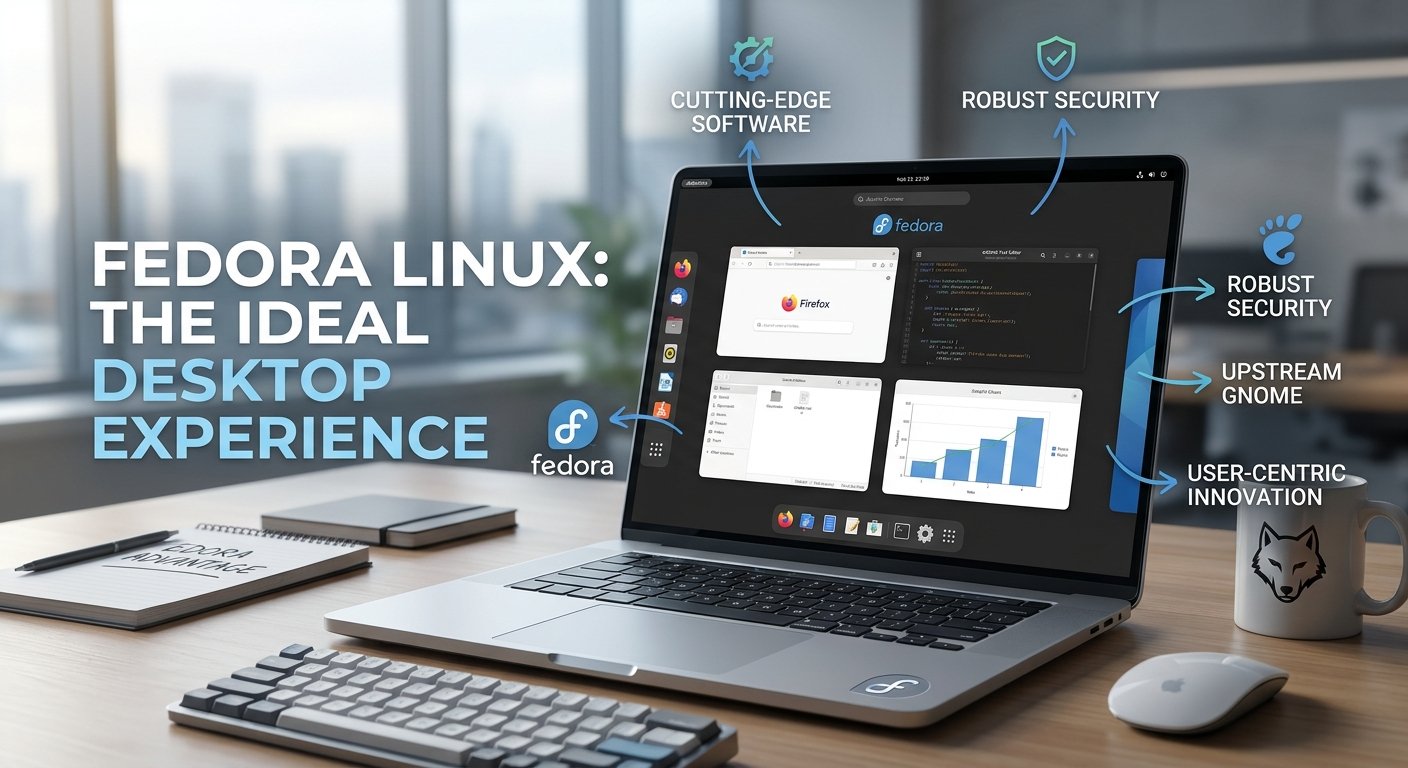
One of the most striking aspects of the Fedora Project is its commitment to delivering software as intended by its original creators. Unlike many operating systems that heavily skin, alter, or bundle proprietary add-ons into their user interfaces, Fedora Workstation ships with a pure, upstream GNOME desktop environment.
This “vanilla” implementation provides a clean, elegant, and distraction-free workspace. Users are given a blank slate free from pre-installed bloatware or aggressive advertising. Because the desktop layer isn’t weighed down by unnecessary background processes, hardware resources are conserved strictly for user applications, resulting in snappy window management, smooth animations, and stellar battery efficiency on laptops.
2. Leading-Edge Software Without Sacrificing Stability
A common dilemma in the Linux ecosystem is choosing between “rolling release” distributions that offer the newest software at the cost of potential system instability, and conservative distributions that ship with outdated software packages.
Fedora solves this brilliantly by operating as a leading-edge distribution. It provides timely kernel updates, modern toolchains, and fresh application packages roughly every six months, ensuring compatibility with the newest hardware peripherals and gaming tech. However, this speed does not come at the expense of reliability. Every release undergoes rigorous quality assurance protocols managed by the community and Red Hat, striking the ultimate balance for daily desktop users who want modern features without constantly troubleshooting broken updates.
3. Robust, Out-of-the-Box Security
Security should never be an afterthought or an optional add-on that requires advanced configuration. Fedora takes a proactive stance on data protection by integrating SELinux (Security-Enhanced Linux) enabled by default.
Complementing traditional Linux permission structures, SELinux enforces mandatory access control policies that sandbox applications and limit the damage a compromised process can inflict on a system. Combined with a dynamic firewall configuration via firewalld and rapid delivery of critical security patches, Fedora creates an exceptionally trustworthy environment for both casual web browsing and sensitive personal data management.
4. Empowerment, Privacy, and True Digital Ownership
Perhaps the most compelling argument for Fedora is philosophical as much as it is technical: digital sovereignty.
- No Surveillance or Telemetry: Unlike commercial operating systems that track user behavior, inject targeted ads into system menus, or harvest telemetry data without explicit consent, Fedora respects user privacy fundamentally.
- Open Source Transparency: Built entirely on open-source principles, every line of code is open to public audit. There are no hidden backdoors or proprietary traps.
- Infinite Freedom: Users retain the legal and technical freedom to inspect, modify, and share the operating system however they see fit.
Conclusion
Migrating to a new operating system can feel daunting, but Fedora Workstation makes the transition remarkably smooth. With an intuitive installer, seamless hardware detection, a vast software repository supported by Flatpak technology, and a welcoming global support network, it removes the traditional barriers to entry for desktop Linux.
For anyone seeking an operating system that respects their privacy, safeguards their data, honors their hardware resources, and stays out of their way, Fedora Linux is an unmatched desktop companion.